All stories · Article
AI is changing the advantage Marketplaces have always had. What does that mean for independent stores?
The advantage of marketplaces was never just having more products. It was making comparison easier.
Share: WhatsApp · Telegram · X · Facebook · LinkedIn · Email

Now AI agents can do that work across multiple stores in seconds. But easier comparison does not automatically make independent stores more attractive. Shoppers still need a reason to trust them.
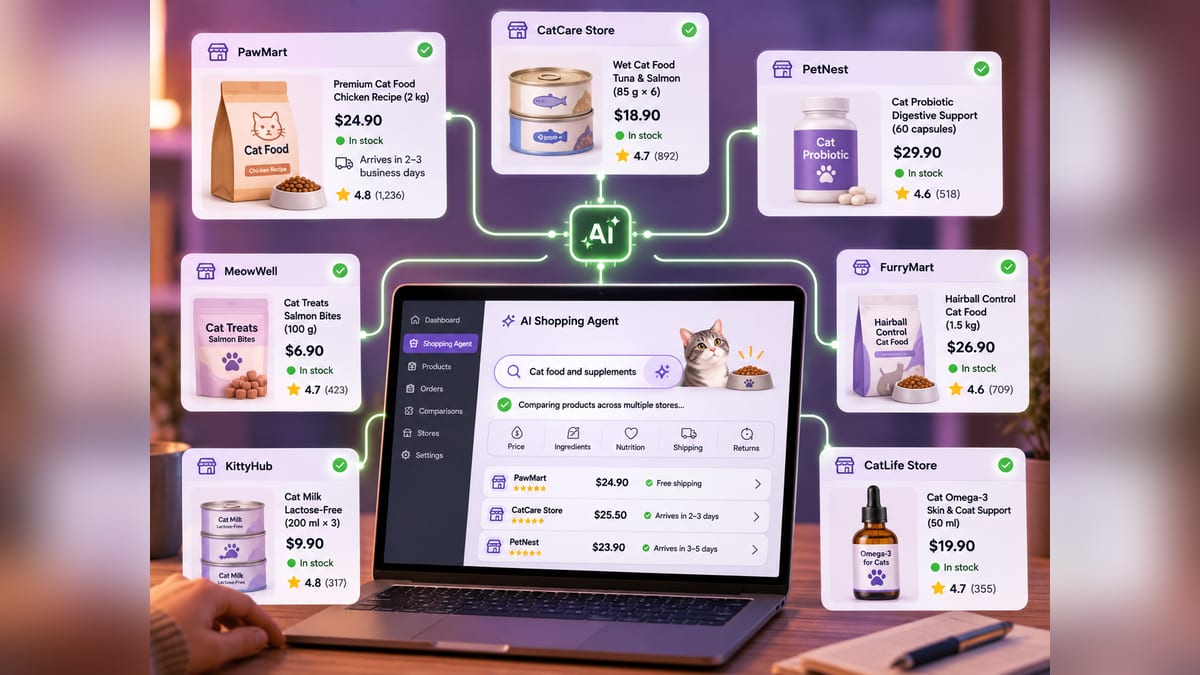
That changes what a product page needs to deliver.
AI makes comparison cheaper. It doesn't make trust automatic.
On October 29, 2026, DoorDash announced its approximately $17 billion acquisition of Instacart. The deal is a reminder of how much value still sits in the infrastructure connecting shoppers, retailers and fulfillment.
But another shift is happening at the shopping interface.
In a LinkedIn discussion about the deal, Avani Oswal argued that marketplaces benefited because comparing individual stores was inconvenient. AI agents remove much of that friction by checking multiple stores on a shopper's behalf.
Imagine an agent comparing six stores for the same product. It checks price, availability, shipping, returns and product specifications. A store that cannot provide clear answers may never make the shortlist.
The comparison is no longer the difficult part. The decision is.
Shoppers still choose marketplaces, even when the offer is equal.
A PYMNTS Intelligence survey of 2,191 U.S. consumers in August 2026 found that, even when price, shipping and return conditions were identical:
Among respondents who preferred a particular seller type, the leading reason was easier or more reliable returns (36.6%), followed by wider product selection (34.9%) and shopping habits (32.7%).
The implication is important: removing the effort of comparison does not remove the trust built through years of marketplace transactions.
An independent store may offer the same product at the same price. But shoppers still need confidence in what happens after they click Buy.
Shopify stores have an information problem.
Bill Hunt, President of Bisan Digital, tested the policy tools of 88 Shopify stores for Search Engine Journal (October 14, 2026).
The findings reveal a gap between having policies and making them usable:
| Questions asked of store policy tools | Usable answers |
|---|---|
| What is the return window? | 70/88 |
| What does shipping cost, and when will it arrive? | 0/88 |
| Can I cancel an order, and by when? | 2/88 |
The same research found that only 7% of the product pages examined exposed the return window as structured data.
In other words, a policy may exist on a website without an agent being able to retrieve the answer when a shopper actually asks for it.
Being published is not the same as being understandable or verifiable.
So, what is your product page for?
It still needs to persuade people. Customers arriving from ads, email, search or social media still land on product pages. Product descriptions, images, reviews and brand positioning still influence their decisions.
But the page now has another responsibility: making the buying conditions clear enough to verify.
That means separating product information from commercial certainty.
Product information
- Exact materials, dimensions, sizes and specifications.
- What is included in the product.
- Compatibility, limitations and usage conditions.
- Stock and variant availability.
Purchase certainty
- How many days customers have to return an item.
- Who pays for return shipping.
- Shipping fees and delivery estimates.
- When an order can still be cancelled.
- Any exceptions to the standard policy.
These details should agree across the product page, shipping and refund policies, structured data and the information supplied to AI agents.
Google already supports structured product information for shipping and returns through Merchant Listing structured data. Shopify has also moved its Knowledge Base into the admin under Sales channels > Agentic > Knowledge base.
According to Shopify's October 26 changelog, merchants can review, edit and publish facts that AI agents receive. Drafted facts do not reach agents until they are published. The previous standalone app will no longer be available after January 15, 2027.
This is not a guarantee that agents will recommend your store. It is a way to reduce the risk of being overlooked because essential information is missing or unclear.
A practical test: Ask AI three questions about your best-selling product.
Do not start by rewriting every product description.
Pick your best-selling product and ask an AI assistant:
- What is the return window for this product, and who pays for return shipping?
- If I order today, what is the shipping cost and estimated delivery date?
- Can I cancel after placing the order? If so, within what timeframe?
Then compare the answers with your actual policies.
If the assistant cannot answer, gives an incorrect answer or relies on vague wording, you have found an information gap.
Fix the facts on the product page and relevant policy pages. Add the appropriate structured data, then review and publish the corresponding facts in Shopify's Knowledge Base.
The next competitive advantage may not be having the most persuasive product description. It may be being the store that can answer the buyer's questions clearly, accurately and consistently.