All stories · Hot News
ChatGPT Enterprise is now available on AWS Marketplace
OpenAI is adding a new enterprise purchasing channel for ChatGPT, allowing eligible AWS customers to use existing cloud spending commitments to pay for AI software.
Share: WhatsApp · Telegram · X · Facebook · LinkedIn · Email

On November 9, 2026, OpenAI made ChatGPT Enterprise available through AWS Marketplace. Organizations can now discover, purchase and manage the product through their existing AWS purchasing and billing relationship. Eligible spending can also count toward their existing AWS commitments.
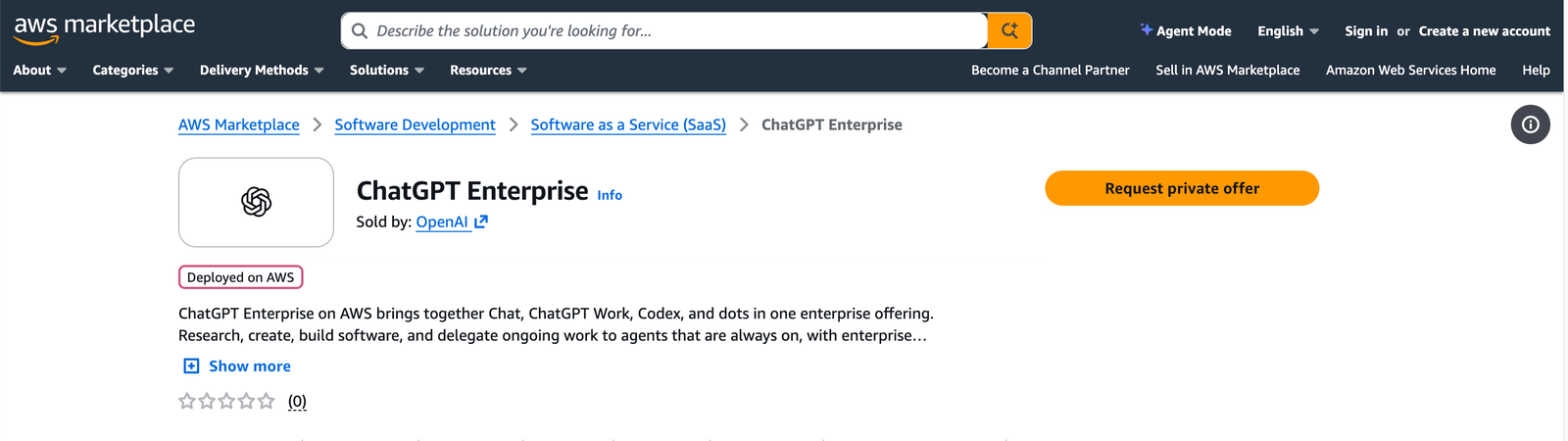
The change is commercial rather than technical: the product stays the same, but enterprises gain another way to buy and pay for it.
What is included in the AWS Marketplace offering?
The listing brings four OpenAI products into one enterprise offering:
- ChatGPT: OpenAI's conversational AI product for everyday workplace tasks.
- ChatGPT Work: An agent for research, analysis and multi-step projects, capable of producing documents, presentations and spreadsheets.
- Codex: A coding agent that can understand codebases, develop features, fix bugs and run tests.
- Dots: Always-on agents that can track updates, maintain documents and analyses, and move ongoing work forward between conversations.
OpenAI says AWS customers receive the same models, features and functionality available to customers purchasing directly from OpenAI. New features will also be released at the same time.
The AWS Marketplace listing identifies OpenAI as the seller. AWS handles purchasing and billing, while the product experience remains managed by OpenAI.
Sources: OpenAI announcement · AWS Marketplace listing
How does AWS Marketplace change the purchasing process?
The main advantage is that businesses can use an existing AWS commercial relationship instead of setting up an entirely separate purchasing route for ChatGPT Enterprise.
The listing supports two key parts of that process:
1. Consolidated purchasing and billing
Companies can purchase ChatGPT Enterprise through their existing AWS account and manage the associated charges through AWS Marketplace.
This gives procurement and finance teams another way to manage enterprise software spending alongside their other AWS purchases.
2. Eligible spending counts toward AWS commitments
Some enterprises have signed multi-year agreements with AWS that include minimum spending commitments.
Two relevant arrangements are:
- EDP (Enterprise Discount Program): An AWS enterprise spending agreement that offers commercial discounts in exchange for committed cloud spending.
- PPA (Private Pricing Agreement): A negotiated pricing agreement with AWS that can also include spending commitments.
Under the new listing, eligible ChatGPT Enterprise spending can count toward these commitments, subject to the customer's agreement.
In practical terms, a company that has already committed a substantial budget to AWS may be able to use part of that commitment to purchase ChatGPT Enterprise.
This is the central commercial benefit: AI software spending can now contribute toward an existing cloud spending agreement.
Matt Yanchyshyn, AWS Vice President of Marketplace and Partner Services, described the goal as enabling enterprises to:
"buy it through their AWS account, govern it alongside the rest of their software spend"
The emphasis is on simplifying procurement and bringing AI software into an existing enterprise spending framework.
Source: PPC Land, November 9, 2026
What should enterprise buyers know about pricing and eligibility?
ChatGPT Enterprise does not have a publicly listed price on AWS Marketplace.
Instead, buyers must request a private offer, which provides a custom quote based on their requirements and eligibility.
Several commercial details have not been publicly disclosed:
- Standard per-user or subscription pricing.
- AWS Marketplace fees or revenue-sharing arrangements.
- The complete criteria for qualifying customers.
- The specific commercial terms attached to individual private offers.
AWS and OpenAI advise customers to contact their respective account teams to confirm eligibility and purchasing conditions.
The distinction matters: being an AWS customer does not automatically mean every organization can apply its ChatGPT Enterprise spending toward an existing commitment.
Does buying through AWS mean business data stays on AWS?
No. The purchasing channel and the data-processing arrangement are separate matters.
The AWS Marketplace listing identifies OpenAI as the data processor and AWS as one of its subprocessors. It also explicitly states that purchasing through AWS Marketplace does not guarantee that all customer data remains on AWS infrastructure or within the customer's AWS environment.
However, eligible customers can configure data residency for supported regions.
According to OpenAI's data residency documentation, ChatGPT Enterprise purchased through AWS Marketplace supports data residency in:
- Australia
- Canada
- Europe (EEA and Switzerland)
- India
- Japan
- Singapore
- South Korea
- United Arab Emirates
- United Kingdom
- United States
There is an important limitation: for workspaces purchased through AWS Marketplace, inference residency is currently available only in the United States.
These two controls serve different purposes:
| Control | What it covers |
|---|---|
| Data residency | Where eligible customer content is stored at rest |
| Inference residency | Where supported model inference runs on GPUs |
Neither guarantees that every category of business data or every processing operation remains within the selected region. External integrations, certain system data and some processing activities may operate outside it.
How is this different from OpenAI models on Amazon Bedrock?
The two offerings serve different enterprise use cases.
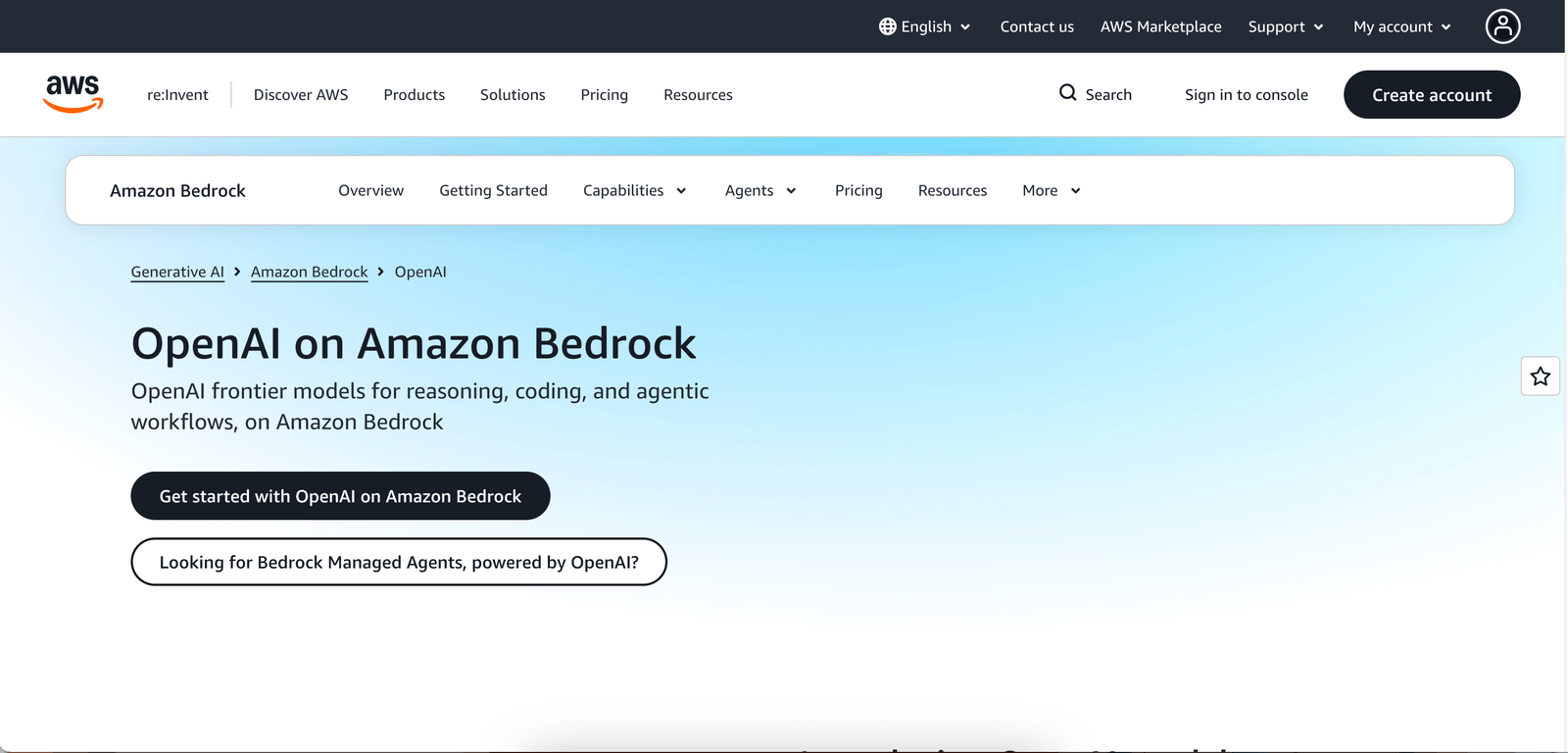
Amazon Bedrock provides OpenAI models for developers building AI applications and agents.
ChatGPT Enterprise provides a workplace environment for employees to use ChatGPT, delegate projects, work with files and build software through Codex.
OpenAI describes the two as complementary rather than competing products.
The distinction is between using AI models as building blocks inside a company's own applications and providing employees with a managed AI workspace.
Organizations can choose either approach, or use both, depending on their workloads and governance requirements.
What does this mean for enterprise software procurement?
The AWS Marketplace launch expands the commercial distribution of ChatGPT Enterprise beyond OpenAI's direct sales channel.
For enterprises already committed to AWS spending, the ability to count eligible ChatGPT purchases toward EDP or PPA commitments creates another way to allocate existing cloud budgets.
For procurement and finance teams, the key considerations are no longer just product features and subscription costs. They also include commitment eligibility, billing arrangements, data residency and governance requirements.
OpenAI has not changed what enterprises buy. It has expanded how they can buy it and where the spending can be accounted for.
Sources · 4 · openai.com, aws.amazon.com, ppc.land +1
- OpenAI - ChatGPT Enterprise now available in AWS Marketplace, November 9, 2026.
- AWS Marketplace - ChatGPT Enterprise, official product listing, purchasing and billing conditions.
- PPC Land - AWS customers can now buy ChatGPT Enterprise against cloud commitments, November 9, 2026.
- OpenAI Help Center - Data residency and inference residency for ChatGPT, supported regions and data-processing scope.
Ask AI next
- What minimum AWS spending commitment (EDP or PPA) is typically needed to apply ChatGPT Enterprise costs toward it?
- How can a company check if its existing AWS EDP or PPA agreement allows ChatGPT Enterprise spend to count?
- Do Azure or Google Cloud offer similar marketplace deals for applying AI spend to cloud commitments?
- What signs would indicate OpenAI plans to bring ChatGPT Enterprise to other cloud marketplaces like Azure or GCP?