All stories · Article
Long-form advertorial-style ads keep winning in supplement and fitness verticals
While many brands keep chasing shorter hooks and faster cuts, some supplement advertisers are finding traction with story-driven ads that take several minutes to make their case.
Share: WhatsApp · Telegram · X · Facebook · LinkedIn · Email

An eight-minute supplement ad reportedly ranked among the top 20 creatives on a brand's page, out of more than 2,500 ads.
According to @tryatria_AI, the ad had been running since October 15 and was still among the page's leading ads when examined on November 6, 2026.
Atria@tryatria_AIThe best ads on Meta play to one of two things.
Your buyer's worst fear. Or their best desire.
The attached one plays to both. 8 minutes long, live since Oct 15, and still top 20 out of 2,500+ ads on its page.
It sells a blood sugar supplement. But the fear isn't diabetes.
It's your daughter saying she can't leave the kids with you anymore.
Or you hurting your grandkids.
And the desire isn't a lower A1C. It's…Nov 6, 2026 · View on X
Resilia offers another example. Its leading creative was reportedly an AI-generated musical lasting around six minutes, according to agency operator @jammer3k.
These are not isolated discussions about video length. Advertisers are increasingly examining long-form, advertorial-style storytelling as a way to sell products that require more explanation and persuasion.
The interesting shift is that, in categories such as supplements and fitness, some advertisers are moving beyond the conventional short-form product pitch and giving the story more room to develop.
Why long-form advertorials fit these categories
Supplements and fitness products often require more than a quick product demonstration.
Consumers may need to understand a problem, compare possible solutions, evaluate ingredients, consider their routines and build enough confidence to make a purchase.
A short ad has limited room to do all of that.
An advertorial-style creative can approach the sale differently. Instead of immediately presenting a product and an offer, it builds a narrative around a problem, develops the consequences, introduces an explanation and eventually positions the product within that story.
The product is not necessarily the opening subject. It becomes part of a longer argument.
A useful example comes from Irgella's DTC supplement case study. The agency describes a heart-health supplement funnel that moved away from conventional product ads towards a native-style ad, a 1,500–2,000-word advertorial and then a product page.
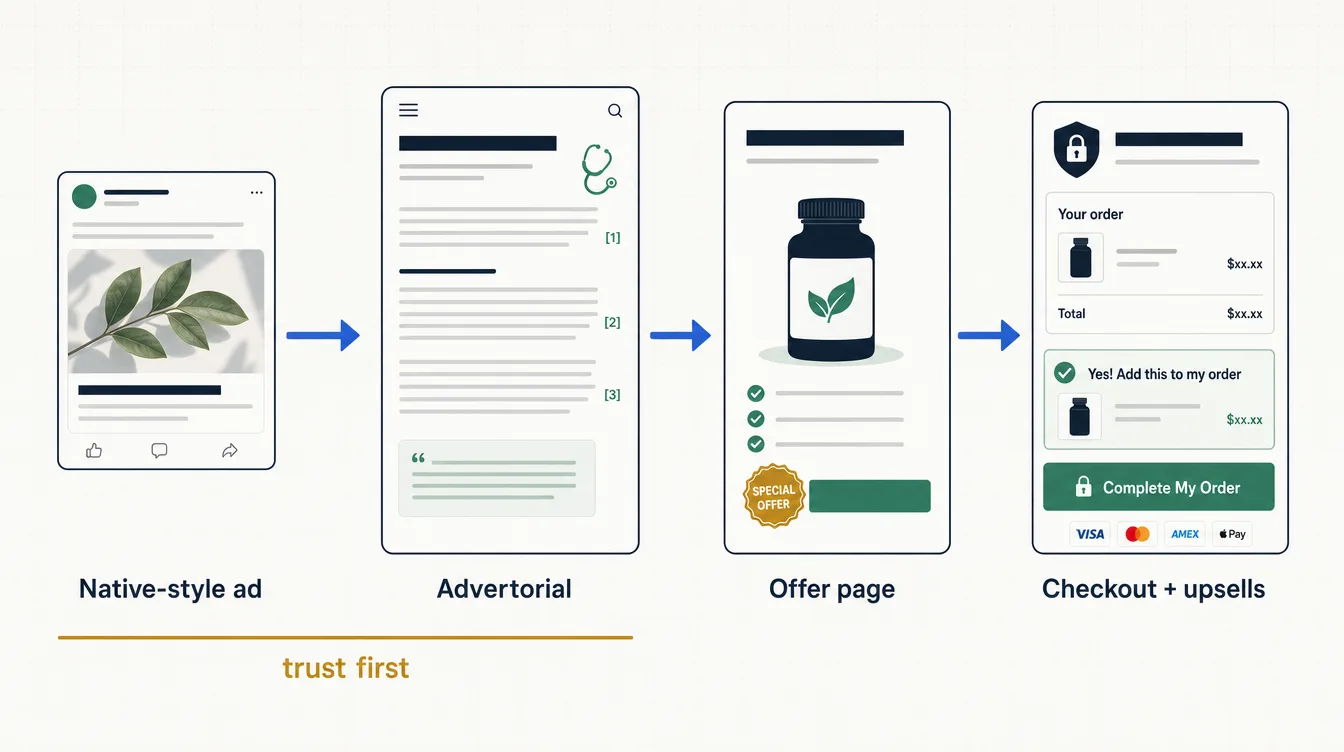
*Source: **https://irgella.com/case-studies/dtc-supplement-meta-ads*
The operator reports that standard product-led creatives initially struggled, while research into customer concerns informed a more editorial approach.
The case study reports $839,650 in Meta ad spend and 8,690 purchases over a documented 30-day period in early 2026. The brand is unnamed, and the revenue figure is estimated rather than independently audited.
This is a useful distinction: long-form advertorials are not simply long videos. They are a broader persuasion format that can extend across the ad, landing page and product offer.
What the winning creatives look like
Recent examples show how varied the format can be.
The eight-minute supplement ad
@tryatria_AI examined an eight-minute blood-sugar supplement ad that reportedly remained among the top 20 creatives on its page.
Its central narrative was not built around a blood-sugar number or an ingredient list. It focused on what declining health could mean for someone's family life and independence.
The six-minute AI musical
According to @jammer3k, Resilia's leading creative was an AI-generated musical of approximately six minutes.
The agency also claimed that Resilia spent around $1 million per month. That figure should be treated as the publisher's claim, not independently verified media-spend data.
The product appears later
In @thedennis's breakdown of an Aurivita ad, the product reportedly appears at around 1:23.
Dennis Willeboordse 👨🏼🦰 eCommerce Growth@thedennisAurivita turns its sales argument into a series of scenes.
A sudden leak. A 3 a.m. bathroom trip. A supplement bottle emptied into a bin.
The product only appears around 1:23. By then, the ad has built a story for it to enter.
Here’s the breakdown:
1. Open with recognition.
The first scene acts out an uncomfortable everyday moment. The viewer has a situation to recognize before hearing a product pitch.
2. Stack…Oct 21, 2026 · View on X
The preceding scenes each have a specific visual storytelling function. The ad gives the audience time to understand the situation before presenting the product.
Across these examples, a recurring structure emerges:
| Story stage | Purpose |
|---|---|
| Recognition | Establish a situation the audience understands |
| Escalation | Show why the problem matters |
| Explanation | Introduce information that helps make sense of the problem |
| Product introduction | Position the product within the narrative |
| Outcome | Connect the offer to the customer's desired result |
The structure can be adapted to different products and audiences. It does not mean every ad needs to follow exactly the same sequence.
Long-form creative is becoming a production category of its own
The shift is also visible in hiring and creative production.
On November 2, @Aasiwos posted a recruitment request for an editor experienced in producing three-to-six-minute AI video ads, including drama, musicals and animation.
This matters because it suggests that some DTC brands are beginning to build production capacity specifically for long-form AI advertising.
The format is no longer necessarily a one-off experiment requiring a large traditional production team. AI-assisted workflows are making it easier to test different characters, scenes, narratives and visual styles.
That does not prove long-form ads are cheaper or more profitable. It does suggest the cost and speed of producing them are changing.
The strongest signal: the story can work without a long runtime
There is an important counterexample to the idea that longer automatically means better.
@growthnoir highlighted a Resilia AI video ad of approximately 60 seconds that reportedly ran for 198 days.
The lesson is not that every seller should produce a six-minute video. It is that a well-constructed narrative can work across different lengths.
A long-form version gives more room for explanation, character development and evidence. A shorter version has to compress those elements into fewer scenes.
The underlying storytelling logic can remain the same.
Sprites' October 2026 supplement video-ad snapshot offers broader category context: it tracked 1,598 video ads from 135 supplement brands in the Meta Ad Library. The reported median run time was 25 days, while the longest-running example had reached 620 days.
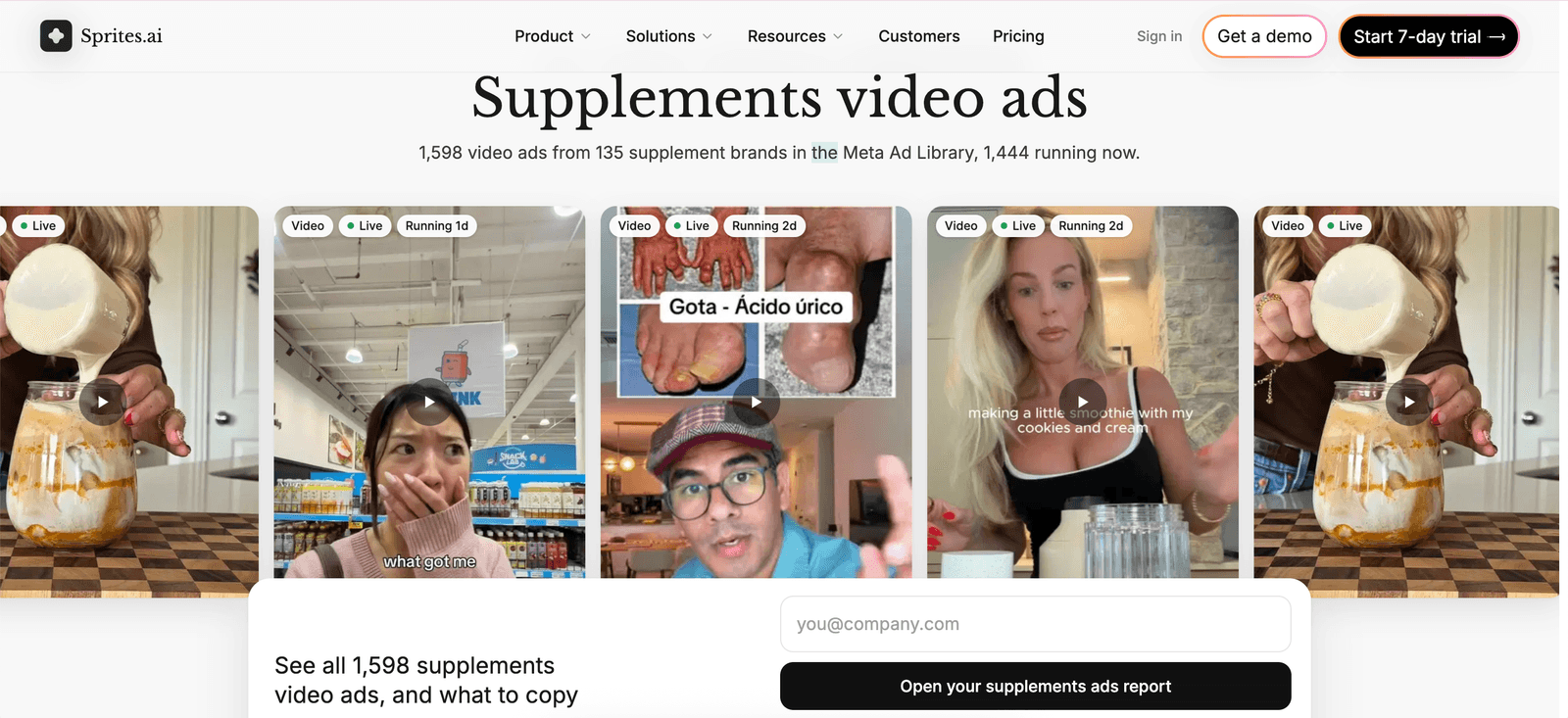
This is an advertising-activity snapshot, not a profitability ranking. An ad remaining live does not establish its ROAS or incremental sales. Still, it provides a useful view of the volume and longevity of video creative in the category.
Not every brand should copy the format
Audience fit matters as much as the creative itself. @StefanGeorgi makes a related point: before blaming a failed hook, advertisers should consider whether the chosen format fits the target demographic.
Supplement and fitness advertisers must also ensure their health claims and targeting comply with Meta's advertising policies. Avoid implying that viewers have specific medical conditions or promising unsupported health outcomes. See Meta's health and beauty advertising policy guidance.
What Shopify sellers should test
The opportunity is not to make every ad longer. It is to test whether a more editorial, story-led approach can communicate the product's value better than a conventional product pitch.
A practical starting point:
- Identify the question or concern customers need answered before buying.
- Build a narrative around that question rather than opening with the product.
- Introduce the product only after the audience understands the context.
- Test a 60-second version before investing in a multi-minute production.
- If the audience responds, expand the narrative into longer video or a dedicated advertorial landing page.
- Evaluate purchases, conversion rate, customer acquisition cost and contribution margin, not just video views or how long an ad remains active.
The question for sellers is no longer just whether their ads should be shorter. It is whether their products need a better story before asking customers to buy.
How much of your current ad budget goes towards short product-led creatives versus long-form, story-driven advertising?