All stories · Article
One script, dozens of AI influencers: how supplement brands are scaling UGC
Between October and November 2026, a series of posts on X highlighted a growing tactic among supplement, hair-growth and wellness brands: building armies of AI-generated influencer characters, publishing videos daily and directing audiences toward the same product.
Share: WhatsApp · Telegram · X · Facebook · LinkedIn · Email

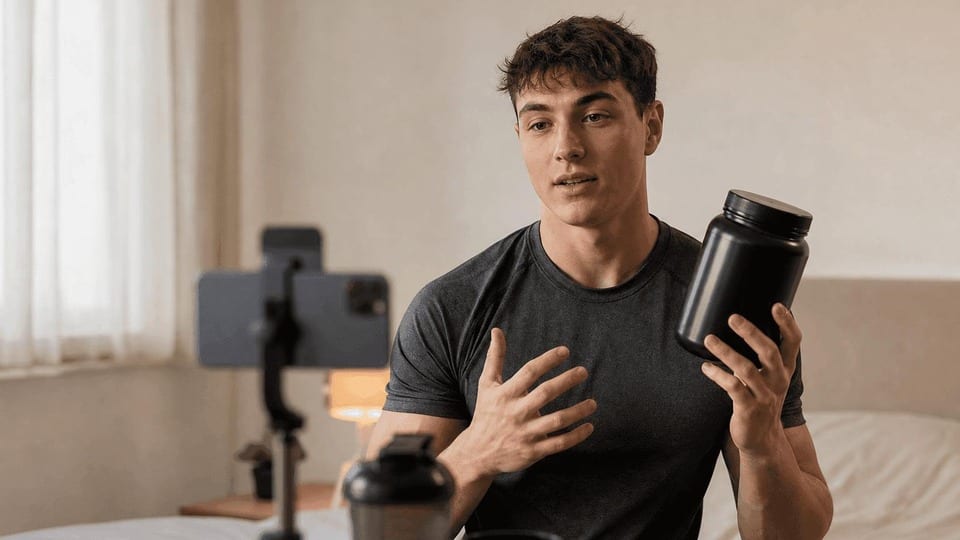
One brand reportedly operates more than 10 AI characters at once. Another takes a winning video, keeps the same hook and product, then recreates it with a different AI face.
The interesting part is not the number of influencers.
These brands are replicating a script that has already shown traction, rather than constantly producing entirely new advertising concepts.
One winning script, dozens of different faces
In one example, @onlytapa described a supplement brand using more than 10 AI-generated characters, each publishing content daily and directing traffic to the same Amazon listing.
Tapa@onlytapaONE supplement brand is behind ALL of these AI influencers
10+ characters. All posting every day. All sending traffic to the same Amazon listing
None of them ask for a rate increase. None of them work for a competitor. None of them exist
The brand owns every single one
This is what scaling a supplement brand looks like now 👇Nov 13, 2026 · View on X
Another example makes the strategy even clearer.
Instead of developing a new video for every influencer, a brand takes a successful sleep-related product video, keeps its original hook and script, then recreates it with a different AI character.
Tapa@onlytapaThe Ecom game is COOKED
This brand found one winning video
Then just kept making it again
Same plane. Same "how to sleep 8 hours in this economy" hook. Same product
New character every time
Different face, different look, different audience, same sale
That's the advantage of AI creative. When a real UGC video wins, you can't reshoot it with 20 different people. With AI you can do it in an afternoon
Find one…Nov 12, 2026 · View on X
This changes the economics of creative production.
With traditional creators, testing a new face often means finding another influencer, negotiating fees, shipping products, waiting for filming and going through revisions.
With AI, much of that process can be compressed. One existing script can generate multiple video variations with different faces, voices and settings.
The face changes. The script stays.
Why the script matters more than the face
One common mistake when experimenting with AI UGC is focusing too much on how realistic the character looks.
But a realistic-looking face does not automatically make a video that converts.
In another post, AI advertising practitioner @Bogzabs96 argued that a good AI ad should have a script strong enough to work even when filmed with a real person. The post also referenced Resilia and its reported 8,000+ ads as an example of creative testing at scale.
Bogdan | Ad Creatives for Meta & TikTok@Bogzabs96I keep thinking about what a good AI ad actually means in 2026.
A lot of teams judge their AI ads on how they look:
- the cleanest Pixar render
- characters that look the same in every shot
- a voice that never drifts
- the newest model on every clip
All important.
But none of it matters if the ad stops working the second you strip the animation out.
Two things decide that:
- a script that would work as a…Nov 11, 2026 · View on X
This connects directly to what supplement brands are doing.
They do not need 20 new ideas to produce 20 videos. They need one idea with promising performance, then AI helps expand the number of variations they can test.
For Shopify sellers, that suggests a different order of priorities:
- Hook: Which opening makes someone stop scrolling?
- Message: What customer problem makes the product relevant?
- Product fit: How does the video explain why the product addresses that problem?
- Creative variation: Once the script works, which elements can change without losing the core message?
AI can change the character, voice, setting and presentation. It cannot independently identify the customer insight that makes someone buy.
AI reduces the cost of replicating creative. It does not replace the work of finding creative that converts.
Views are not the same as revenue
The numbers circulating in the marketing community are impressive. Posts mention videos reaching millions of views, accounts accumulating hundreds of thousands of followers and production costs falling dramatically.
But three metrics need to be separated:
| Metric | What it actually tells you |
|---|---|
| Views | How many views the content receives |
| Followers | How many people follow the account |
| Revenue | How much money the content actually generates |
Most examples in this discussion show views and follower counts. Revenue figures are largely estimates from observers, not sales results publicly reported by the brands themselves.
A video reaching millions of views does not automatically mean it generated thousands of orders.
There is also a counterargument. Some DTC marketers warn that consumers may react negatively when they discover that the person recommending a product does not actually exist.
For health-related products, the gap between a realistic-looking video and a genuine testimonial deserves particular attention.
This is more than a branding issue.
The FTC's guidance states that health-related claims, including claims about dietary supplements, must be supported by appropriate scientific evidence. Testimonials cannot substitute for evidence of product effectiveness.
The FTC also makes an important distinction: using AI-generated avatars in marketing is not categorically prohibited. However, fake testimonials attributed to nonexistent people can violate the rules against deceptive reviews and testimonials.
Additional references:
So the challenge is not simply replacing human creators with AI to reduce production costs. Brands still need to protect the credibility of their messaging and ensure that what their AI characters say about a product is truthful.
Start with the video that already sells
If you run a supplement or wellness store on Shopify and want to experiment with this model, creating 10 AI influencers should not be your first move.
Start by opening your ad library and finding the video that generated the most orders.
Then examine:
- Hook: What made customers stop scrolling?
- Message: Which customer need did the video address?
- Structure: Can the original sequence of information remain unchanged?
- Variables: Which characters, voices, settings or presentation styles are worth testing?
If you already have a winning script, create a few AI variations and test whether changing the character can extend its performance.
If none of your videos has demonstrated the ability to generate orders, producing dozens of AI faces simply gives you more creatives to test. It does not necessarily give you a better one.
Before replicating a creative:
- Rank videos by orders or revenue, not just views.
- Use a script with clear sales results as your starting point.
- Define measurement criteria in advance, such as CPA, conversion rate or revenue per video.
- Never let an AI character fabricate personal product experiences or make fictional health testimonials.
Ultimately, the advantage will not belong to the brand with the largest army of AI influencers.
It will belong to the brand that finds a winning sales script and can test it faster, cheaper and with greater control.
Ask AI next
- Which AI video generation tools are brands actually using to run dozens of AI influencer characters off one script?
- What disclosure language should AI avatar testimonial videos use to stay compliant with FTC rules?
- What CPA or conversion-rate benchmark signals a UGC script is strong enough to replicate across AI characters?
- Has the FTC taken any enforcement action yet against brands using AI-generated testimonials for supplements?
- Do consumer-protection regulators outside the US scrutinize AI influencer health testimonials too?