All stories · Hot News
OpenAI launches ChatGPT Wallet: How ChatGPT Dots can shop and pay for users
OpenAI launched ChatGPT Wallet on November 13, 2026, giving its AI agents, called dots, the ability to complete purchases on behalf of users.
Share: WhatsApp · Telegram · X · Facebook · LinkedIn · Email

Instead of stopping at product recommendations, a dot can now browse merchant websites, prepare an order and submit payment after the customer approves it. The initial rollout is limited to eligible ChatGPT Pro users in the US, with a security check required for every purchase.
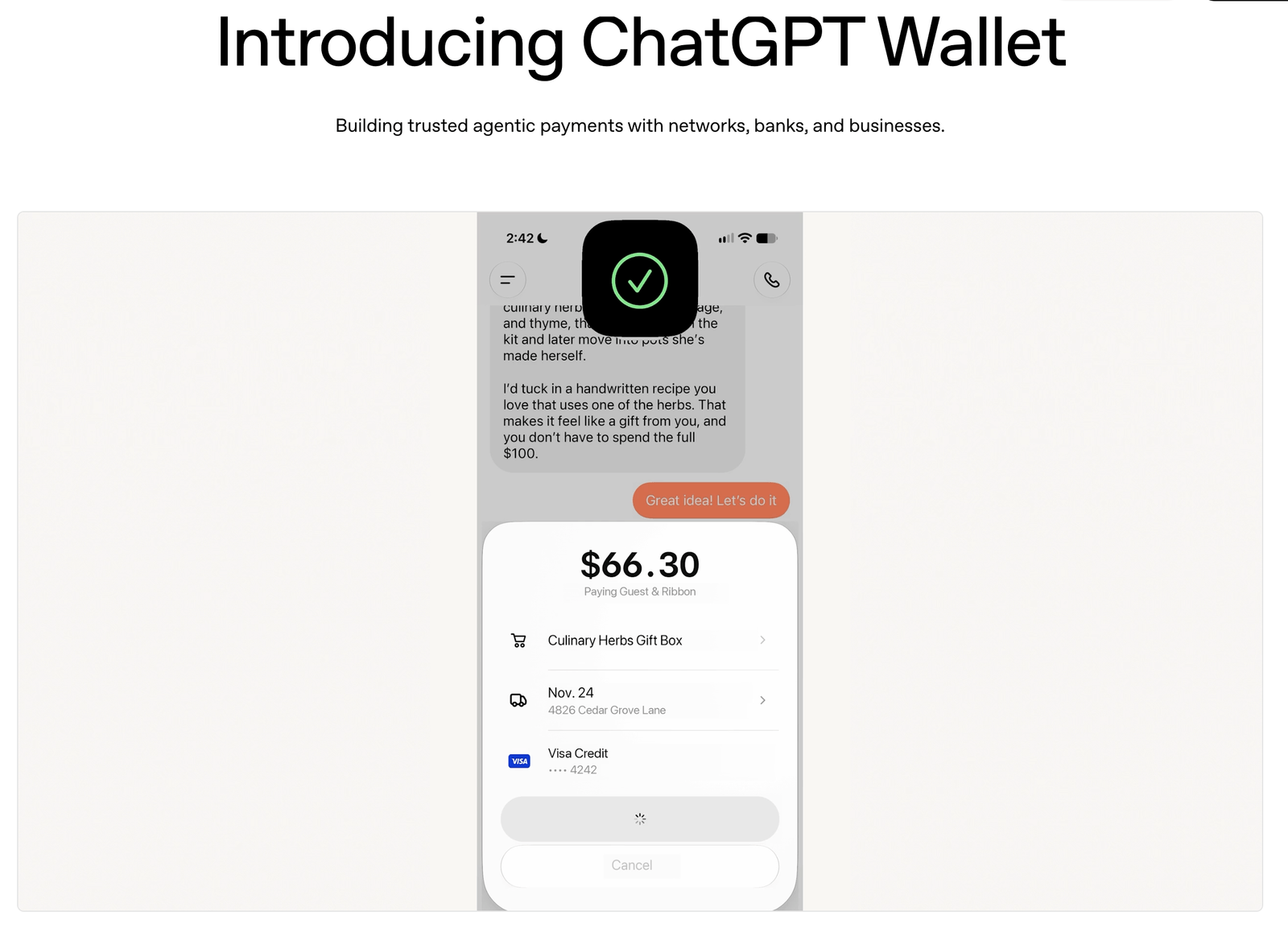
What is ChatGPT Wallet?
ChatGPT Wallet is a payment feature that lets a ChatGPT agent pay on a user's behalf using a saved payment card.
It is not a bank account or a wallet balance. Users add an eligible credit card once, then authorize their dot to use a tokenized payment credential when making a purchase.
The feature was developed with American Express, Mastercard and Visa. Its purpose is to let AI agents complete transactions through existing merchant payment systems without exposing the user's actual card details.
Source: OpenAI, Introducing ChatGPT Wallet
What is a dot, and how does it make a purchase?
A dot is ChatGPT's personal AI agent. It can browse websites, research products and carry out tasks on a user's behalf.
With Wallet, the shopping process goes beyond finding something to buy.
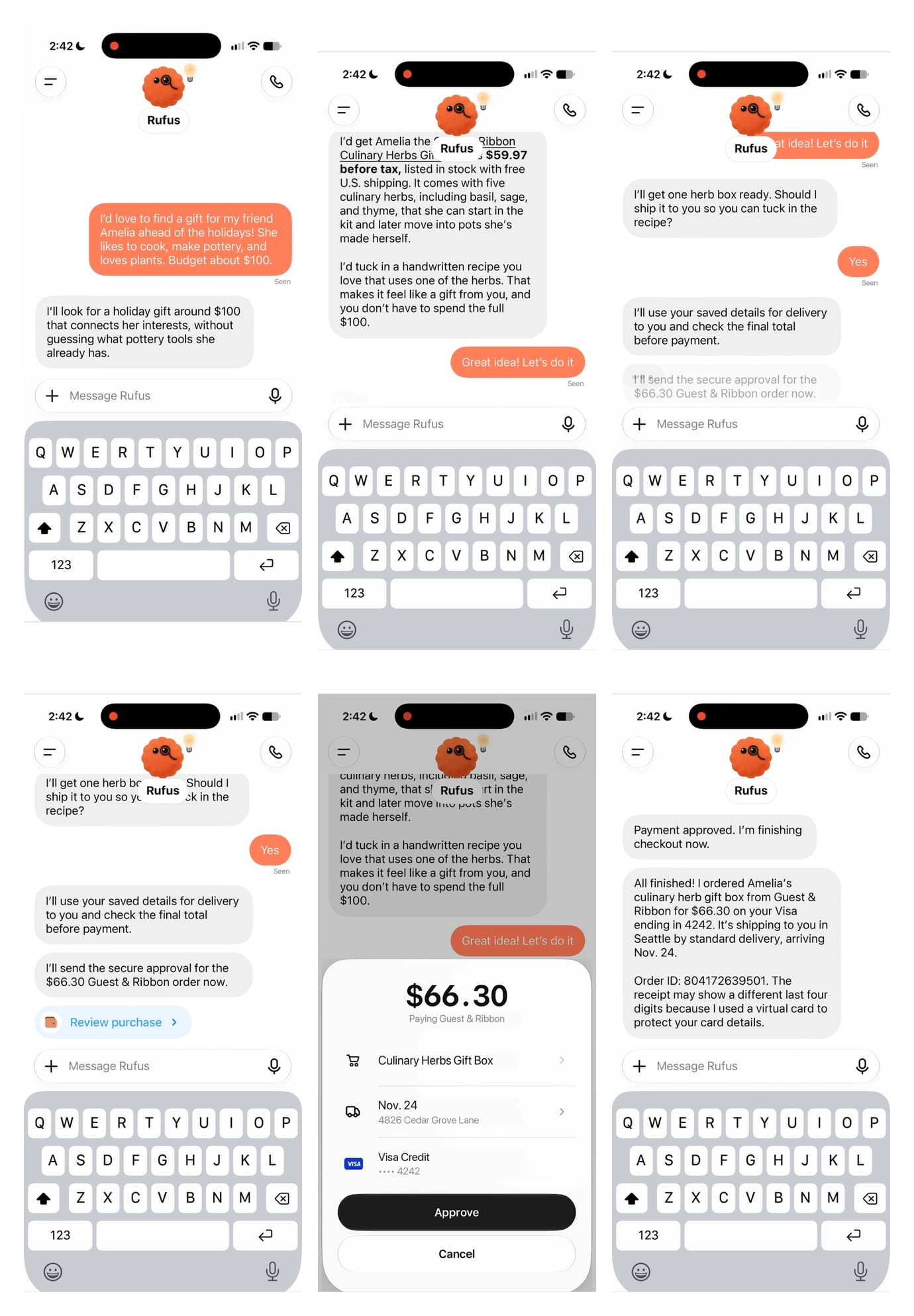
First, the dot finds a product. The user asks it to search for an item, compare options or find something that meets specific requirements.
Next, it prepares the order. The dot visits the merchant's website, selects the product and proceeds through the existing checkout. It can provide the shipping and contact information needed to complete the order.
Then, the user approves the purchase. ChatGPT Wallet displays the available transaction details, including the merchant, items, total price and selected card. The user reviews them and confirms through biometric verification, such as Face ID or Touch ID.
Finally, the dot submits payment. After approval, it uses a tokenized payment credential to complete checkout. The merchant receives the order information needed to process the purchase.
The important distinction is that the dot performs the checkout work, but the user retains control over payment authorization.
Source: OpenAI Wallet Help Center
Who can use ChatGPT Wallet, and where does it work?
The initial rollout is restricted to a specific group of users.
| Requirement | Current availability |
|---|---|
| ChatGPT plan | Eligible ChatGPT Pro users |
| Age | 18 or older |
| Location | US residents using Wallet in the US |
| Card | Eligible US-issued American Express, Chase, Mastercard or Visa cards |
| Billing address | US billing address |
| Approval | Biometric verification for each purchase |
Wallet works in conversations with dots. It is not available in regular ChatGPT, Work or standalone Codex threads.
It also does not work at every merchant. A website may block automated browser activity, or its checkout and payment risk systems may reject an agent transaction.
OpenAI has not announced a general availability date for other countries or subscription plans.
How does payment work without exposing the customer's card?
This is where payment tokenization comes in.
Users save their eligible card in Wallet. When a purchase is approved, the payment network provides a tokenized credential that substitutes for the actual card details.
The credential can contain a card number, security code and expiration date, but it is different from the number printed on the physical card.
The dot and the merchant do not receive the customer's actual card number. The transaction is still charged to the selected card account, and eligible card rewards and protections remain in place.
There are three separate responsibilities in this process:
- The customer approves the specific purchase.
- The card issuer and payment network handle payment authorization.
- The merchant decides whether to accept the order and remains responsible for fulfillment, returns and customer service.
Approval does not guarantee that the merchant has accepted the order. The customer still needs to check the merchant's order confirmation.
Sources: OpenAI Wallet Terms and Accept Payments.
Does a merchant need to integrate ChatGPT Wallet?
Not necessarily. OpenAI says Wallet works with existing checkout pages and payment forms without a Wallet-specific integration.
This means merchants do not need to replace their checkout or build a separate payment system just to support Wallet.
However, compatibility is not automatic in every case. Two parts of the merchant's infrastructure matter:
- Website access: CDNs, firewalls and bot protection systems must not inadvertently block verified ChatGPT browser requests.
- Payment risk systems: Fraud prevention tools must be able to recognize legitimate agent transactions rather than automatically treating them as suspicious bot activity.
OpenAI recommends Web Bot Auth for verified agent access and is working with payment providers including Adyen, Checkout.com and Stripe, as well as fraud prevention companies such as Forter, Riskified, Sardine and Signifyd.
Sources: OpenAI, Agent Access and Accept Payments.
How is ChatGPT Wallet different from Shopify's ChatGPT channel?
They address two different stages of the shopping journey.
Shopify's ChatGPT channel helps customers discover products. Customers find products through ChatGPT and are redirected to the merchant's online store checkout to complete their purchase.
ChatGPT Wallet lets an agent execute payment. The dot can browse the merchant's website, prepare the order and submit payment after the user approves it.
Shopify describes ChatGPT as a discovery-focused channel, with customers completing purchases through their own store checkout. Wallet adds a payment capability to the agent-led shopping process.
The two can complement each other, but product visibility through Shopify's ChatGPT channel does not automatically guarantee that every merchant checkout will accept Wallet transactions.
Source: Shopify Help Center, Selling on ChatGPT
What changes when AI can actually pay?
The biggest change is not simply that ChatGPT has added another payment method. It is that AI can now participate in the transaction itself.
Previously, an AI shopping assistant could help customers research products, compare prices and decide what to buy. The customer still had to take over at checkout.
Wallet changes that division of work. The agent can handle product selection, order preparation and payment submission, while the customer supervises and authorizes the transaction.
This moves AI from product discovery toward transaction execution.
For ecommerce merchants, the implications go beyond payment compatibility. Websites must be accessible to legitimate agents, checkout flows must work with automated browsing, and fraud systems must distinguish authorized agent activity from malicious bots.
The merchant still owns the sale. The customer still controls authorization. But the agent is becoming the one that carries out more of the buying process.
Ask AI next
- How can I test whether a ChatGPT agent can complete checkout on my Shopify store?
- Can Shopify's bot protection or checkout CAPTCHA block AI agents like ChatGPT, and how do I let them through?
- Who bears the chargeback when a shopper disputes a purchase that a ChatGPT agent made?
- Can stores based outside the US receive ChatGPT Wallet orders from US shoppers?
- Which tools show how often AI agents like ChatGPT visit my Shopify store and which orders they place?