All stories · Article
Shopify rebuilt its mobile app from the ground up
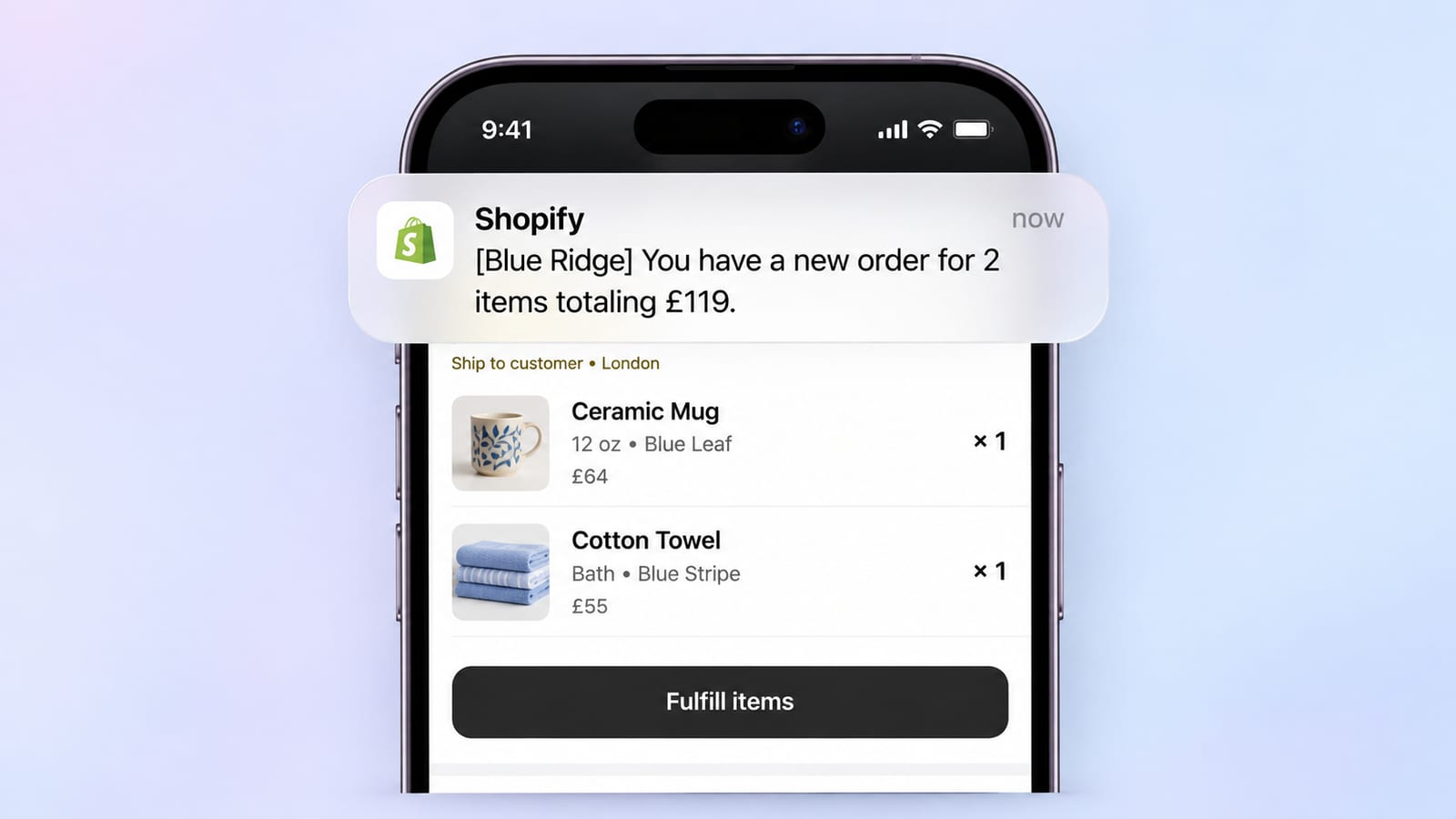
Shopify has rebuilt its mobile app for iOS and Android using native technologies, moving away from React Native in favor of Swift and Kotlin.
Share: WhatsApp · Telegram · X · Facebook · LinkedIn · Email

The update brings a refreshed design, smoother animations and gestures, haptic feedback, and faster startup times. According to Shopify engineer Mustafa Ali, the Android app now launches in less than half the time it previously took.
Mustafa Ali@mustafa01aliWe’ve rebuilt the @Shopify mobile app from the ground up in native for iOS and Android 📱
The new experience brings a fresh design, smoother interactions, and Liquid Glass on iOS. It also launches faster on both platforms, with Android launch time cut by more than half. https://t.co/LcsGRUjc2VOct 30, 2026 · View on X
From React Native back to native
Shopify announced its decision to move its mobile apps back to native development on September 10, 2026, in its engineering article, Native is now the future of mobile at Shopify.
The company had adopted React Native in 2020, allowing developers to build features once and deploy them across iOS and Android. The approach reduced duplicated work and made it easier for engineers without specialized mobile experience to contribute.
But the economics of mobile development have changed.
Advances in large language models and coding agents have made it increasingly practical to build and maintain separate native applications. Agents can use an existing iOS implementation as a reference for Android, translate features between platforms, and help maintain consistency through shared specifications and automated tests.
Shopify concluded that the benefits of a shared React Native codebase no longer outweighed the advantages of building directly for each platform.
What changes in the new app?
The October update combines architectural changes with a redesigned user experience.
Shopify's October 13 Changelog highlights three improvements:
- Faster app launches and screen loading.
- Smoother transitions between screens.
- A refreshed, mobile-first interface that matches the updated Shopify admin design.
The engineering team has also highlighted several platform-specific improvements.
On iOS, the new app supports Apple's Liquid Glass design language. Gestures, animations and haptic feedback have also been redesigned to feel more native to the operating system.
On Android, Mustafa Ali reported that startup time has been reduced by more than 50%.
In a separate October 30 post, Michael Schwaibold described the release as the biggest design change the Shopify app has undergone, adding that more improvements are still to come.
AI helped rebuild more than 300 screens
The scale of the project makes the migration particularly notable.
Shopify's merchant app contains more than 300 screens, along with home-screen and lock-screen widgets, an Apple Watch app, watch complications and Siri Shortcuts.
Rebuilding an application of this size separately for iOS and Android would traditionally require substantial engineering time.
Shopify used coding agents to accelerate the process, supported by an internal system called Helix.
As explained in the company's engineering article about Helix, the system breaks migration work into small, reviewable checkpoints rather than asking an AI model to rewrite entire sections in one attempt.
Each checkpoint goes through several quality controls:
- Agents inspect the existing React Native implementation.
- They generate and implement native features in Swift or Kotlin.
- Automated tests verify expected behavior.
- Engineers review visual differences and code quality.
- Human approval is required before the next checkpoint proceeds.
The goal is not simply to generate code faster. Shopify wants a development process in which AI agents can implement, test and improve features while engineers retain control over quality.
A broader shift across Shopify's mobile apps
The Shopify app is not the first product to undergo this transition.
The separate Shop app, used by consumers to discover and track purchases, was the first to complete its native migration.
According to Shopify's September 10 engineering report, the team moved Shop from React Native to Swift and Kotlin, going from proof of concept to published native applications in just 12 weeks.
Shopify reported the following results for the Shop app:
| Metric | iOS | Android |
|---|---|---|
| Startup time reduction | 23% | 50% |
| App size change | +1 MB | -109 MB |
| Session stability | Improved | Improved |
These figures apply to the Shop app, not the newly rebuilt Shopify merchant app.
The broader migration also covers other mobile products, including Shopify Point of Sale and Shopify Inbox.
What's next?
Shopify says it plans to migrate all its mobile applications to Swift and Kotlin, using AI throughout the development process.
The company is also making a broader architectural shift: building applications that both engineers and AI agents can understand, test and modify more efficiently.
Its stated measures of success go beyond migration speed. Shopify plans to evaluate the transition through product development velocity, app quality and the amount of work agents can complete autonomously.
The bigger story is not simply that Shopify replaced React Native with Swift and Kotlin. It's that advances in AI coding agents have changed the economics of building native mobile software, making a full rebuild a practical option where it once would have been prohibitively expensive.