All stories · Article
The global wellness market is worth $7.5 trillion. Where is the money going?
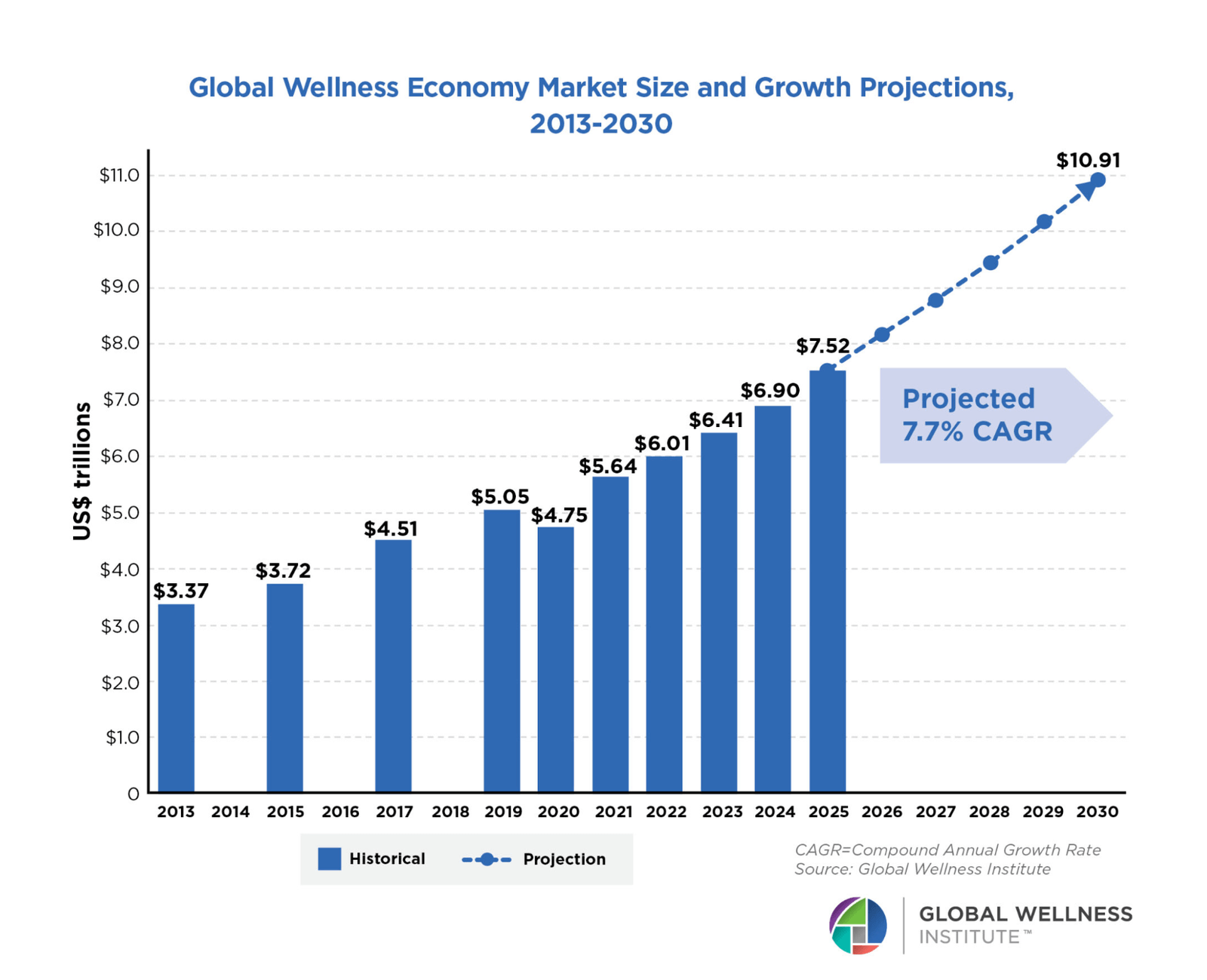
The global wellness economy reached $7.5 trillion in 2025, up 8.9% year over year. The Global Wellness Institute (GWI) expects it to reach $10.9 trillion by 2030, growing faster than the projected global economy.
Share: WhatsApp · Telegram · X · Facebook · LinkedIn · Email

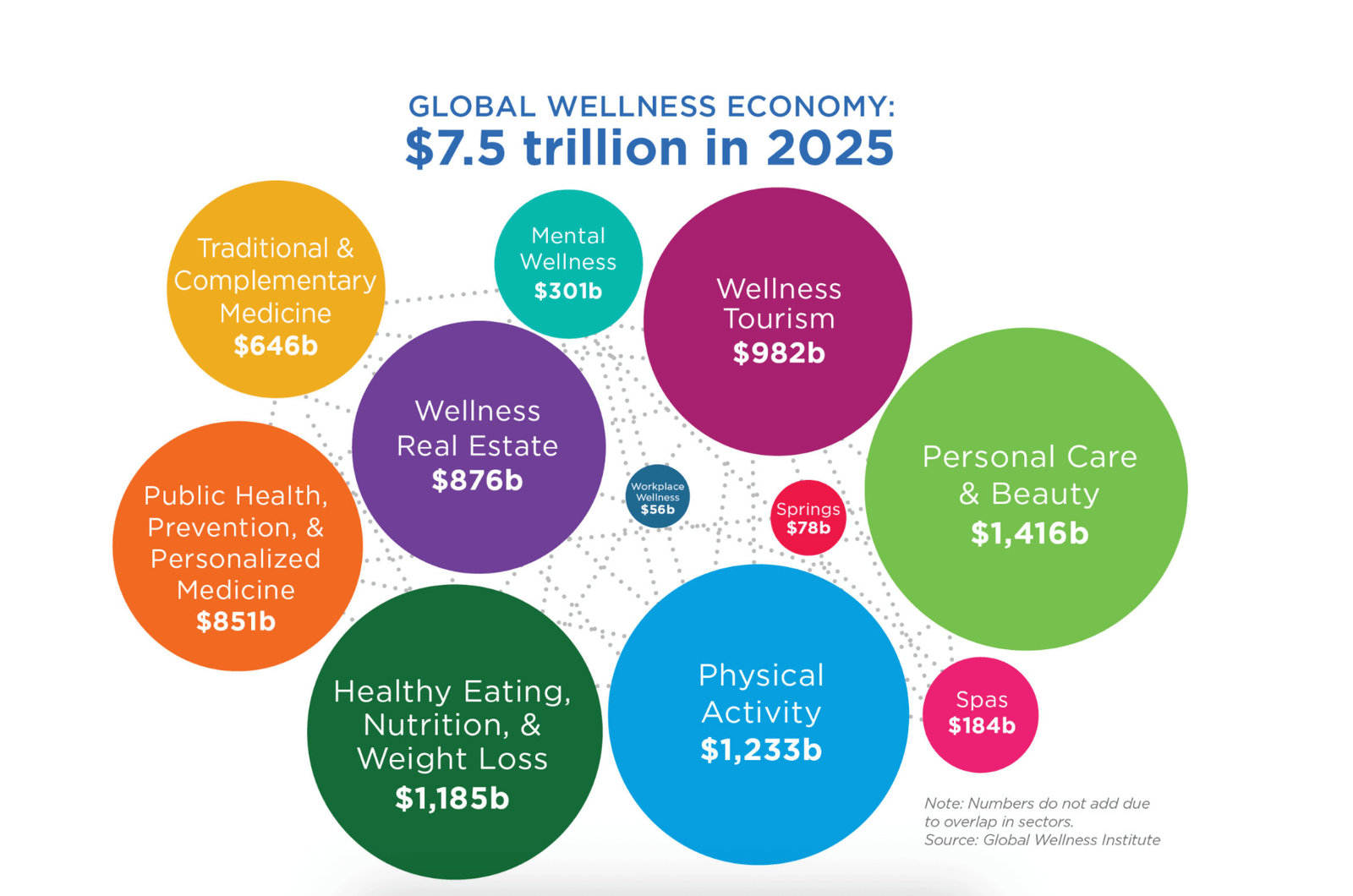
But the headline number tells only part of the story. The strongest growth is happening in areas that extend beyond traditional fitness, beauty and nutrition. Wellness-focused real estate and mental wellness are expanding rapidly, tourism-related businesses are recovering, and consumers are becoming more demanding about product effectiveness.
Three developments help explain where the market is heading: new spending categories, increased financing activity and a growing preference for products backed by credible information.
A $7.5 trillion market spanning 11 industries
On November 11, 2026, GWI released its Global Wellness Economy Monitor 2026, measuring 11 sectors of the global wellness economy.
The market grew 8.9% between 2024 and 2025, reaching $7.5 trillion. It has expanded by 49% since 2019, equivalent to an annual growth rate of 6.9%.
GWI forecasts annual growth of 7.7% through 2030, taking the market to $10.9 trillion. That is faster than the 5.1% global GDP growth projected by the IMF figures cited in GWI's report.
The 11 sectors and their estimated 2025 market sizes:
| Sector | 2025 market size |
|---|---|
| Personal care and beauty | $1.4T |
| Physical activity | $1.2T |
| Healthy eating, nutrition and weight loss | $1.2T |
| Wellness tourism | $982B |
| Wellness real estate | $876B |
| Public health, prevention and personalized medicine | $851B |
| Traditional and complementary medicine | $646B |
| Mental wellness | $301B |
| Spas | $184B |
| Thermal and mineral springs | $78B |
| Workplace wellness | $56B |
Source: GWI, Global Wellness Economy Monitor 2026 and GWI's published sector data.
The scale of the market becomes clearer when looking beyond consumer products. Wellness now includes everything from supplements and fitness services to residential developments, wellness travel and workplace programs.
This broad definition is important when comparing market estimates. For example, McKinsey estimates the global wellness market at $2.7 trillion in its Future of Wellness 2027 research. That figure uses a different market definition and category coverage from GWI's $7.5 trillion estimate. The two numbers should not be treated as competing estimates of an identical market.
Wellness real estate and mental wellness lead growth
Not all wellness sectors are expanding at the same pace. GWI identifies wellness real estate and mental wellness as the two fastest-growing sectors over the 2019–2025 period.
Wellness real estate grew by 23.5% annually between 2019 and 2025.
The category reached $876 billion in 2025, up from $246 billion in 2019. GWI expects it to grow by another 15.3% annually through 2030.
This sector covers properties designed to support physical and mental well-being. Examples include residential communities with green spaces and walking paths, buildings designed around healthier indoor air and natural light, and hotels or resorts integrating wellness facilities and services.
It is more than adding a gym or spa to a property. Wellness is increasingly becoming part of how buildings, neighborhoods and hospitality projects are planned.
GWI expects wellness real estate to become the second-largest wellness sector by 2030, behind personal care and beauty.
Mental wellness is the second-fastest-growing sector.
It reached $301 billion in 2025, growing at an average annual rate of 11.9% since 2019. GWI projects another 12.6% annual growth through 2030.
The category includes spending on meditation, mindfulness, sleep-related products and services, stress management and other activities supporting mental well-being.
Other sectors are also recovering strongly. Between 2024 and 2025, wellness tourism grew 11.4%, spas grew 12.8%, and thermal and mineral springs grew 10.4%.
Meanwhile, the more established consumer categories continue to expand at a steadier pace:
- Personal care and beauty: 5.0% annual growth from 2019 to 2025.
- Physical activity: 5.3%.
- Healthy eating, nutrition and weight loss: 4.5%.
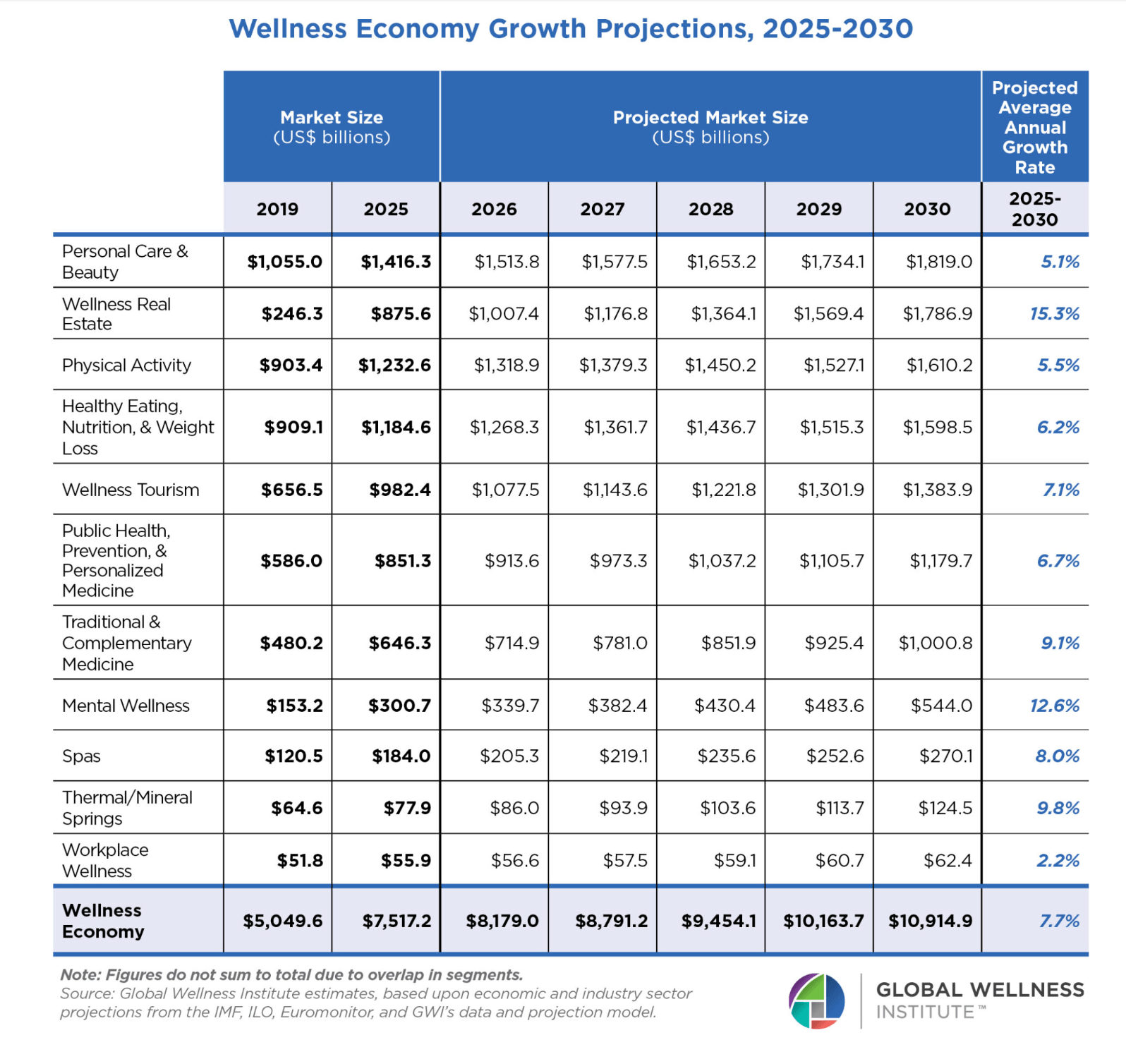
The contrast is significant. The fastest-growing opportunities are increasingly found in new wellness-related environments and services, while traditional consumer categories remain large but grow more moderately.
Source: GWI, Global Wellness Economy Monitor 2026.
Fitness businesses are turning to debt markets
The expansion of the wellness sector is also taking place alongside increased financing activity among established fitness businesses.
Two transactions involving Crunch Fitness and Peloton illustrate different approaches to raising capital.
Crunch Fitness is seeking approximately $800 million through a franchise-backed bond sale.
According to Bloomberg reporting published by Athletech News on November 12, Crunch is exploring a whole-business securitization backed by revenue from its franchise operations.
The proposed structure includes:
- $650 million in bonds marketed to institutional investors.
- A $100 million privately placed note.
- A $50 million variable funding facility.
The transaction could launch as soon as the following week, although the terms were still being discussed at the time of reporting.
Source: Athletech News, November 12, 2026.
Peloton has priced a $700 million senior secured notes offering.
On November 10, Peloton announced an upsized offering of $700 million in senior secured notes carrying an 8.625% annual interest rate and maturing in 2032.
The company initially announced a $600 million offering before increasing the size to $700 million.
Peloton intends to use the net proceeds, together with cash on hand, primarily to repay its existing $1 billion term loan facility. The offering is part of a broader refinancing plan, and settlement was expected on November 20, subject to customary closing conditions.
Source: Peloton Investor Relations, November 10, 2026.
The two transactions show how established fitness businesses are using debt markets to manage their financing needs. Crunch is seeking to raise capital against franchise revenue, while Peloton is refinancing existing debt.
They are examples of financial activity around the wellness industry, rather than direct measures of consumer spending.
Additional source: S&P Global Ratings, preliminary ratings for Crunch Funding LLC, November 12, 2026.
Wellness consumers are demanding more than marketing claims
Market growth is only one part of the story. Consumer expectations are also changing.
McKinsey's Future of Wellness 2027 research surveyed more than 10,000 consumers in the United States, United Kingdom, Germany and China. Around 40% reported unmet needs in areas including longevity, mental health and mobility.
The research also identified two groups that account for a disproportionate share of spending:
| Consumer group | Share of consumers | Share of spending |
|---|---|---|
| Maximalist optimizers | 25% | 40% |
| Confident enthusiasts | 10% | 15% |
| Combined | 35% | 55% |
These consumers tend to prioritize effectiveness and quality over price.
For vitamins, minerals, supplements and over-the-counter health products, clear ingredient labeling ranks among the five most important purchase considerations for these high-spending groups.
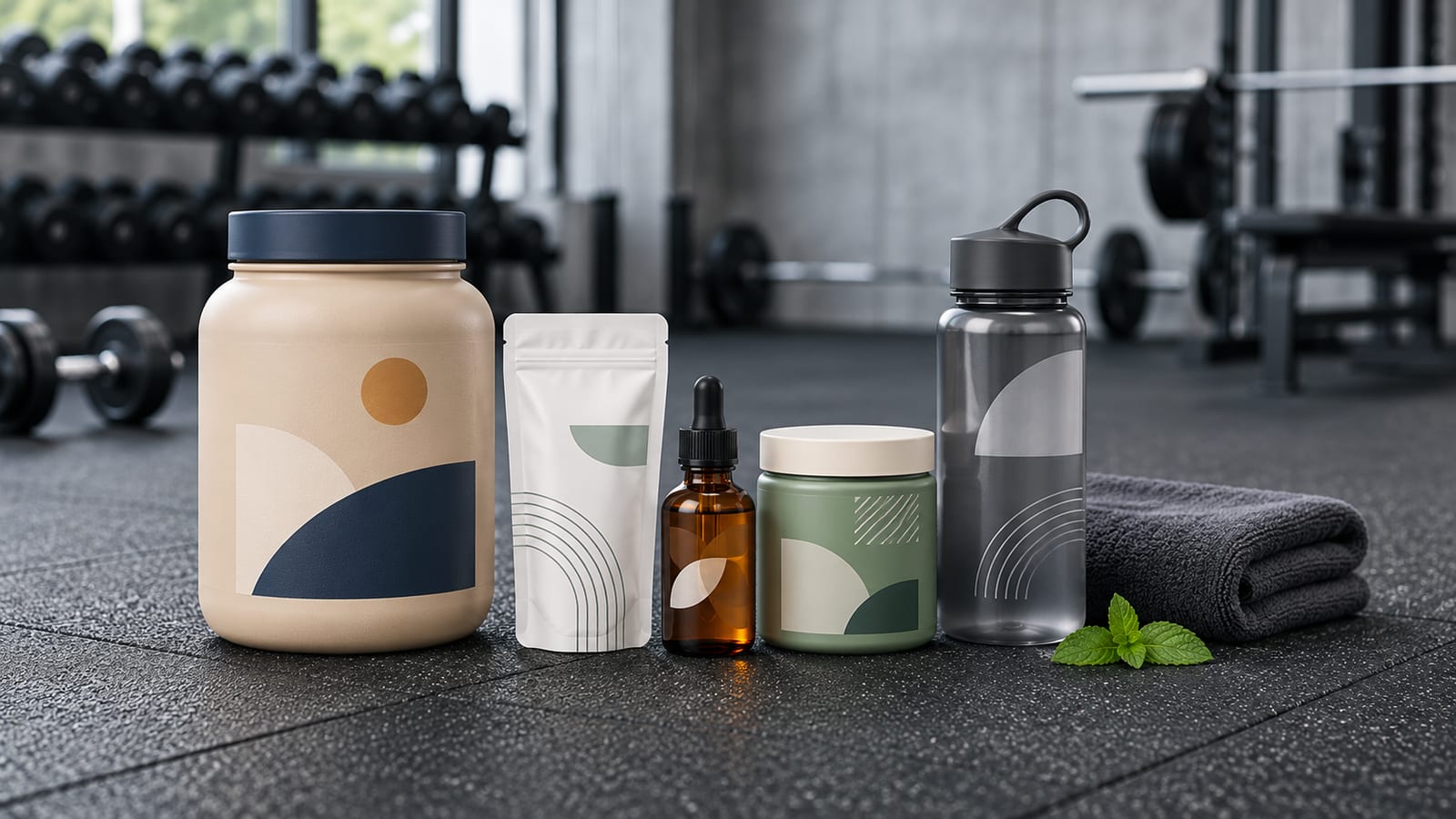
The trend is especially relevant as health-related marketing becomes more common. In the United States, approximately one-third of new consumer packaged goods launches through September 2026 included at least one health or wellness claim, compared with 24% in 2021.
Yet more claims have not eliminated unmet consumer needs. McKinsey found that around 40% of consumers still felt existing products and services failed to meet their expectations in several wellness categories.
For brands, this creates a more competitive environment. Simply adding words such as "boosts energy," "supports longevity" or "improves recovery" may not be enough to convince an increasingly informed buyer.
Product effectiveness, ingredient transparency and credible supporting information are becoming more important.
Source: McKinsey's Future of Wellness 2027 findings, reported by NutraIngredients, November 10, 2026.
What the market shift means for wellness brands
The $7.5 trillion market is not growing because of one product category or one consumer trend. It is expanding across real estate, tourism, mental health, personal care, nutrition and physical activity.
Three developments stand out:
- Wellness is becoming part of everyday environments. Residential projects, hotels and communities are increasingly incorporating health-oriented design and services.
- Established fitness businesses are accessing more sophisticated financing structures. Franchise-backed securitization and corporate refinancing illustrate how capital is being raised and managed in the sector.
- Consumers are placing greater weight on effectiveness and quality. High-spending buyers want more than broad wellness claims. They look for clear ingredients and credible product information.
For Shopify sellers in beauty, nutrition, fitness and personal care, the broader market growth is encouraging, but each category has its own trajectory. GWI's figures show that these established consumer sectors are growing at roughly 4.5% to 5.3% annually, below the overall market's projected 7.7% growth.
The opportunity is therefore not simply to enter a growing market. It is to understand which segment is expanding, what consumers expect from products in that segment, and how a brand can demonstrate its value.
The next phase of wellness growth will be shaped not only by how much consumers spend, but also by where they spend it and which businesses can meet their rising expectations.
Ask AI next
- What proof should a supplement brand show on Shopify product pages to back claims like "supports longevity"?
- What are the FTC rules for health claims on supplement and wellness product pages?
- How can I spot McKinsey's high-spending "maximalist optimizer" wellness shoppers in my Shopify customer data?
- Which countries have the fastest-growing wellness markets, according to GWI's country data?
- Which tools show rising demand in wellness niches like sleep, stress relief or longevity products?