All stories · Article
Two new 2027 Shopify deadlines agencies need to flag to clients now
Shopify is introducing three app security and integration changes between November 2026 and March 2027. Public apps must configure IP allowlists, migrate to expiring offline access tokens, and replace storefront script tags.
Share: WhatsApp · Telegram · X · Facebook · LinkedIn · Email

Partner-created custom apps installed outside their owning organization also face new IP allowlist requirements.
The deadlines are close, but they do not apply equally to every app. Public apps must configure IP allowlists by November 20, 2026, and migrate to expiring offline access tokens by January 1, 2027. Partner-created custom apps installed outside their owning organization must have allowlists for new installations from November 20 and existing installations by January 1. On March 1, 2027, Shopify will stop injecting script tags into storefronts.
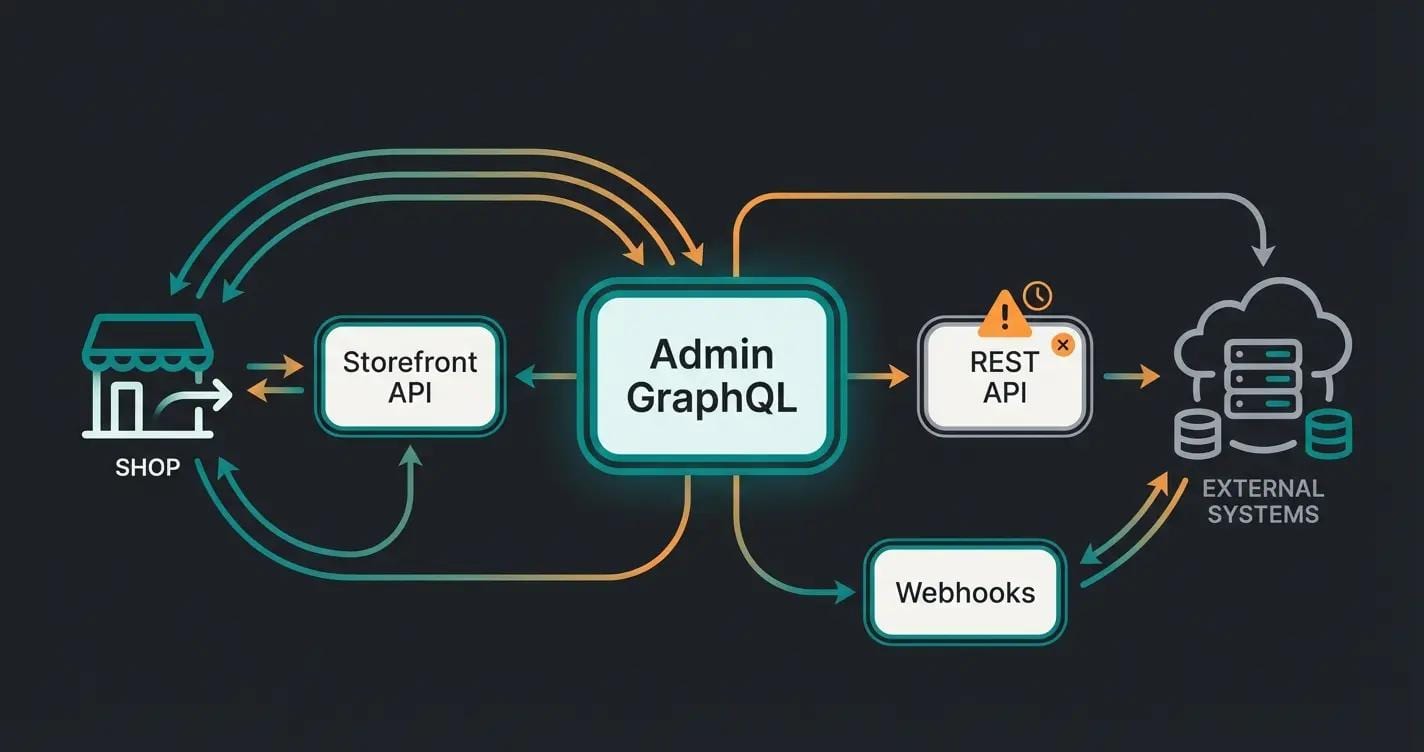
The risk falls on the merchant's store, even when the developer is responsible for fixing the app. A public app that misses the token deadline will be delisted and blocked from new installations. From April 1, affected Admin API requests using non-expiring tokens will return HTTP 403. One custom app without an allowlist can also prevent a partner from installing any of its apps on stores outside its organization. Meanwhile, storefront features relying on script tags will stop working after March 1.
For agencies managing multiple stores, the challenge is knowing what is installed and who owns it. A store may contain public apps, partner-created custom apps, merchant-created apps, and integrations left behind by previous developers. Without an inventory, an agency may not even know which vendor to contact.
The first step is therefore to classify every app, identify its owner, and assign the correct deadline before starting any migration work.
Which deadline applies to which app?
The app's distribution model determines its security requirements. Its technical implementation determines whether the script tag cutoff applies.
| App type | IP allowlist | Offline token | Script tag |
|---|---|---|---|
| Public app | Nov 20, 2026. Nov 12 if using bulk operations | Jan 1, 2027 | Mar 1, 2027, if used |
| Partner-created custom app installed outside its owning organization | Nov 20 for new installs; Jan 1 for existing installs | Exempt | Mar 1, 2027, if used |
| Custom app installed only within its owning organization | Not required | Exempt | Mar 1, 2027, if used |
| Merchant-created custom app | Not required | Exempt | Mar 1, 2027, if used |
Sources: Public app allowlist rules, custom app allowlist rules, offline token migration, script tag timeline.
Three distinctions are particularly important:
- Public apps face two separate requirements: an IP allowlist and expiring offline access tokens.
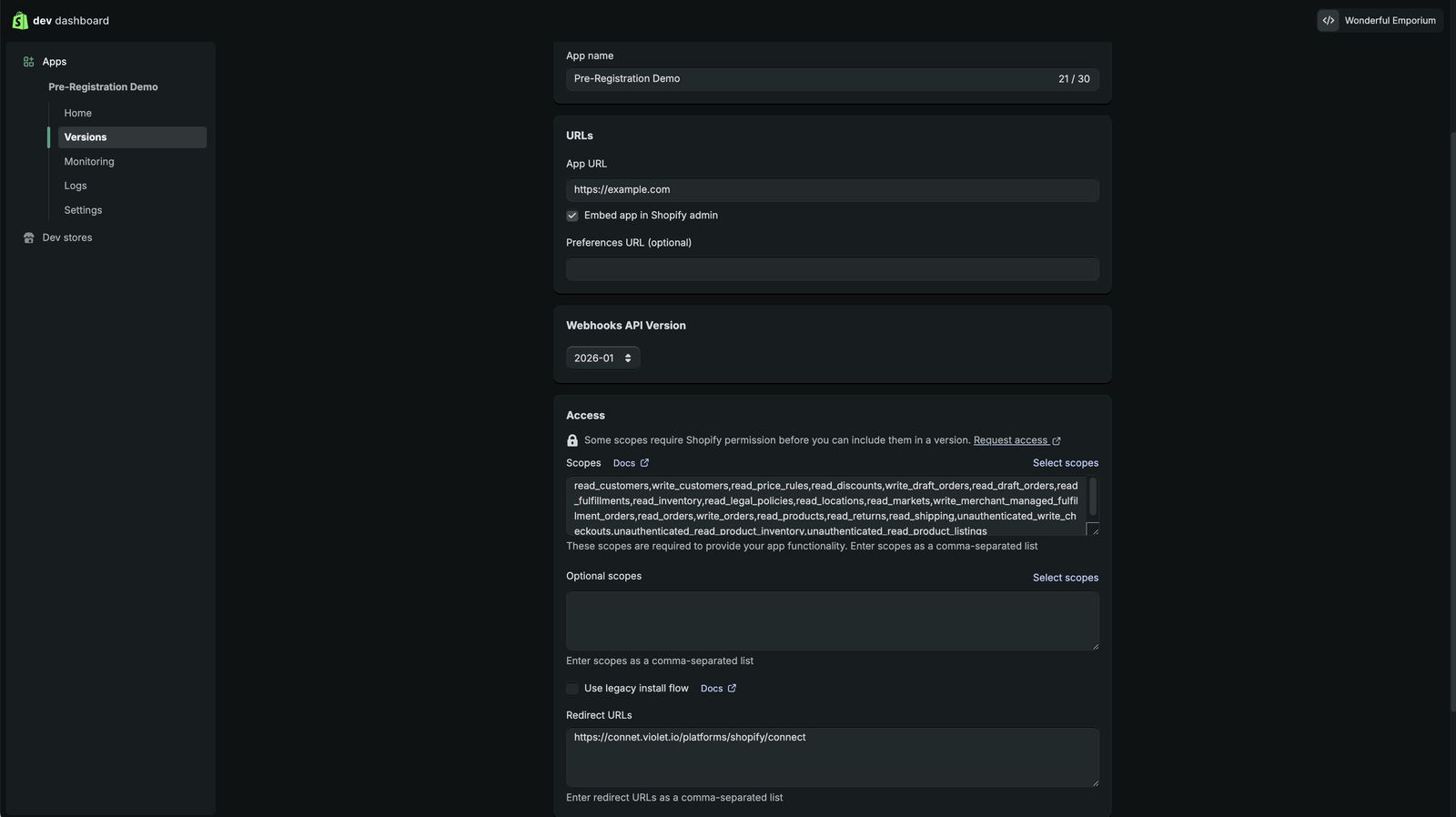
- Partner-created custom apps need allowlists when installed outside the organization that owns them. Merchant-created apps and apps installed only within the owner's organization are exempt.
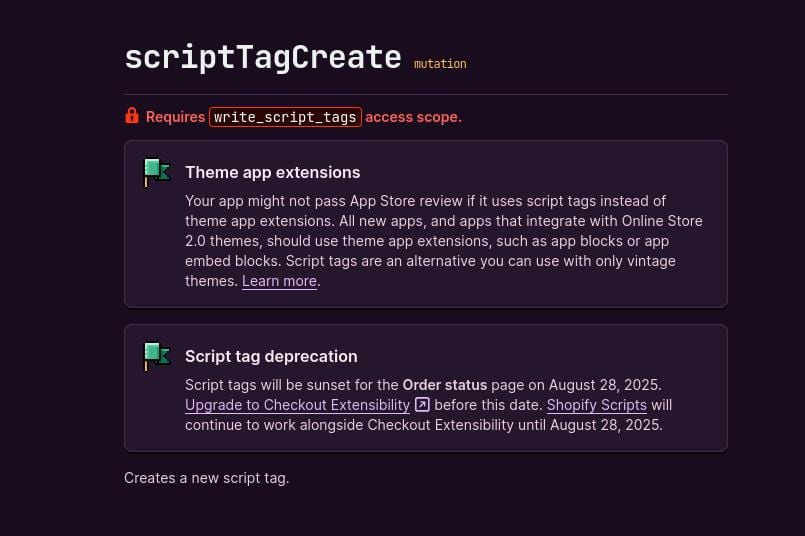
- Script tag deprecation applies regardless of app type. Any app still using storefront script tags must migrate.
One missing allowlist can block a partner's next installation
The January 1 deadline creates a portfolio-level risk for Shopify agencies and partners.
A partner-created custom app installed outside its owning organization needs an IP allowlist. Shopify requires it for new installations from November 20, 2026, and existing installations by January 1, 2027.
From January 1, one custom app without an allowlist can prevent the partner from installing any of its apps on stores outside its organization.
This means an agency cannot audit only the apps it actively maintains. It must also check older integrations, apps created for former clients, and applications that may no longer have a clear owner.
An IP allowlist restricts which networks can call Shopify's Admin API using an app's credentials. Requests from outside the approved IP addresses or networks return HTTP 403 when enforcement applies.
Shopify supports static IP addresses, CIDR ranges, and hosting-provider ASNs for apps with dynamic outbound IPs. However, specific IP addresses offer stronger protection because an ASN can include infrastructure used by other customers of the same hosting provider.
Before enabling enforcement, developers should test the allowlist against actual application traffic.
Sources: Shopify's custom app requirement, IP allowlist configuration guide.
Custom apps are exempt from token migration, not script tag deprecation
The statement that "custom apps are exempt" is only partly correct.
Merchant-created custom apps and partner-created custom apps are excluded from the expiring offline access token migration. Merchant-created apps are also excluded from the new custom app allowlist requirement. Partner-created apps, however, still need allowlists when installed outside their owning organization.
Neither exemption removes the script tag requirement.
Shopify stopped allowing developers to create or update storefront script tags on October 1, 2026. Existing tags continue running until March 1, 2027, when Shopify will stop injecting them into storefront pages.
The replacement depends on the script's function:
- Storefront JavaScript: Move the functionality into a theme app extension, usually an app embed block.
- Analytics and conversion tracking: Use a web pixel where appropriate.
There is one implementation detail agencies should not overlook: app embed blocks must be enabled separately for each theme. The agency needs to confirm that the block is active on the theme the store actually publishes.
Running the old script tag alongside its replacement can also load the same script twice, potentially duplicating analytics events or app interfaces.
Shopify has also decided not to show the previously planned warning banner for apps using script tags. This makes a manual audit essential, particularly for older apps that no one actively maintains.
Source: Shopify's storefront script tag documentation.
What merchants will see in Shopify admin
Shopify provides some warnings, but merchants should not expect the admin to identify every app requiring attention.
| Requirement | Merchant notification |
|---|---|
| Public app IP allowlist | Apps without an allowlist are flagged in Settings > Apps from Nov 20, 2026 |
| Public app offline token | Apps are flagged from Jan 1, 2027; merchant warnings begin Jan 15 |
| Partner-created custom app allowlist | No equivalent merchant warning schedule is specified |
| Storefront script tags | No planned installation warning banner |
The token migration has three enforcement stages:
- January 1, 2027: Non-compliant public apps are delisted and blocked from new installations. Existing installations continue working.
- January 15, 2027: Merchants receive admin warnings about affected apps.
- April 1, 2027: Affected Admin API requests using non-expiring offline tokens return HTTP 403.
The public app IP allowlist requirement also reaches API enforcement on April 1. Existing installations continue working until that date, even if the app has been delisted earlier.
These later enforcement dates are not extensions of the migration deadline. Developers still need to complete the required changes by the original dates.
Sources: Shopify's November 5 security update, offline token migration, IP allowlist documentation.
Before January 1: the agency app audit
Agencies should create one app inventory for every client store. The goal is to identify the responsible party and the next action for each integration.
1. Identify every app
- Record all installed apps, including custom apps and integrations left by previous developers.
- Classify each app as public, partner-created custom, or merchant-created custom.
- Record the owning organization, developer, vendor, and maintenance contact.
- Identify apps that call the Admin API or inject JavaScript into the storefront.
- Check whether public apps use bulk operations, which have an earlier allowlist deadline.
2. Assign the right deadline
- Confirm public apps have IP allowlists by November 20, or November 12 if they use bulk operations.
- Confirm partner-created custom apps installed outside their owning organization have allowlists for new installs from November 20 and existing installs by January 1.
- Ask public app vendors to confirm expiring offline token migration before January 1.
- Audit script tags and agree on replacements before March 1.
- Test allowlists against actual traffic before enforcement.
3. Make ownership visible to clients
For every app, report its compliance status, remaining work, responsible owner, and deadline.
The most dangerous app may not be the one with the most users. It may be an old integration that nobody remembers installing, nobody knows how to access, and nobody has agreed to maintain.
For agencies, the 2027 deadlines are therefore not just a developer issue. They are an app ownership and operational visibility issue. The first step to protecting a client store is knowing exactly what is running on it and who is responsible.
Additional community context
- Filippos Dematis: partner-created custom app requirements
- Vladimir Gubarev: Shopify developer deadline analysis
Community posts provide operational context. The dates, requirements, and enforcement details in this article are based on Shopify's official documentation.
Ask AI next
- How can an agency verify each app's IP allowlist and token status across client stores before admin flags appear?
- What are the steps to enable an app embed block on every theme a store might publish, not just the live one?
- How does Shopify detect an app's source IP for allowlist checks when it runs behind a CDN or serverless host?
- Do these new app deadlines apply equally across all Shopify plans, from Basic to Plus and enterprise?
- What tools can audit installed apps, allowlist status, and token type across many client stores at once?